

Exploring the Pros and Cons of Health Information Technology in Healthcare, this introduction sets the stage for an insightful discussion on the impact of technology in the healthcare industry. From enhancing patient care to addressing potential challenges, this topic delves into the complexities of integrating technology into healthcare practices.
As we navigate through the various aspects of health information technology, we aim to provide a balanced view that highlights both the benefits and drawbacks of this technological advancement.
Pros of Health Information Technology in Healthcare
Health information technology plays a crucial role in improving patient care by enhancing communication, increasing access to services, and ensuring patient safety.
Improved Patient Care
- Health information technology allows for easy access to patient records, enabling healthcare providers to make more informed decisions about patient treatment.
- Electronic health records (EHRs) centralize patient information, reducing errors and improving coordination of care among different providers.
- Health IT systems can provide alerts for potential drug interactions or allergies, helping healthcare professionals avoid harmful mistakes.
Streamlined Communication
- Electronic health records facilitate seamless communication between healthcare providers by allowing them to share patient information quickly and securely.
- Telemedicine platforms enable remote consultations and monitoring, improving access to healthcare services for patients in rural or underserved areas.
- Telehealth services can also reduce the need for in-person visits, saving time and resources for both patients and providers.
Enhanced Patient Safety
- Health information technology systems help reduce medical errors by providing accurate and up-to-date patient information to healthcare providers.
- Electronic prescribing systems can minimize medication errors by ensuring the correct dosage and avoiding potential drug interactions.
- Health IT solutions enhance patient safety by improving the tracking and management of medical records and treatment plans.
Cons of Health Information Technology in Healthcare
While health information technology offers numerous benefits, there are also several drawbacks that need to be considered.
Potential Privacy and Security Issues
Electronic health records raise concerns about the privacy and security of patient information. Data breaches, hacking incidents, and unauthorized access to sensitive data can compromise patient confidentiality and lead to identity theft or fraud.
Challenges with Interoperability
The lack of interoperability among different health information systems poses a significant challenge. Incompatibility between systems can hinder the seamless exchange of patient data between healthcare providers, leading to gaps in information sharing and potentially affecting patient care.
Risks of Technology Failures
Technology failures in healthcare settings, such as system crashes or glitches, can have serious consequences. Patient data may become inaccessible, leading to delays in treatment, medication errors, or disruptions in care delivery. These failures can compromise patient safety and result in adverse outcomes.
Impact on Patient-Provider Relationship
The increasing reliance on health information technology can impact the patient-provider relationship. Some patients may feel that technology detracts from personalized care and reduces the quality of interactions with healthcare providers. The use of electronic devices during appointments may create a barrier to effective communication and diminish the patient experience.
Implementation Challenges
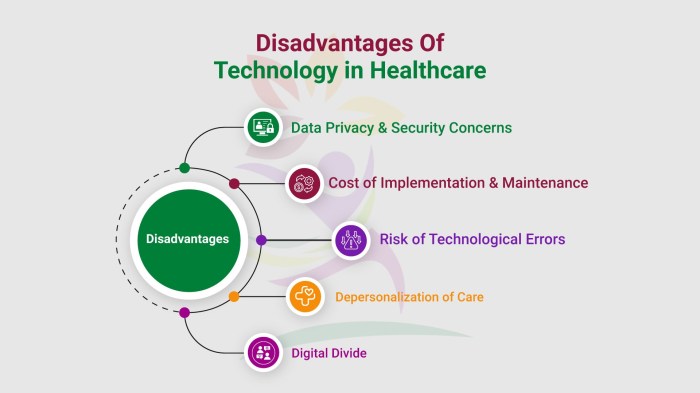
Implementing health information technology in healthcare organizations comes with various challenges that need to be addressed for successful adoption and utilization.
Barriers to Adoption
There are several barriers that hinder the adoption of health information technology in healthcare organizations, such as:
- Lack of financial resources to invest in technology infrastructure.
- Resistance from healthcare professionals who are accustomed to traditional paper-based systems.
- Concerns about data security and privacy compliance.
Costs Associated with Implementation
The implementation and maintenance of health information systems can be costly due to factors like:
- Purchasing and installing hardware and software.
- Training staff on how to use the new technology effectively.
- Upgrading systems to ensure compatibility with evolving healthcare standards.
Training Requirements for Healthcare Professionals
Healthcare professionals need adequate training to effectively use health information technology, including:
- Understanding how to input and access patient data accurately.
- Utilizing electronic health records (EHRs) for patient care management.
- Following proper protocols to maintain data integrity and security.
Strategies to Overcome Resistance to Change
Overcoming resistance to change during the implementation process can be achieved through various strategies, such as:
- Engaging stakeholders early in the decision-making process to address concerns and gain buy-in.
- Providing continuous training and support to help staff adapt to the new technology.
- Communicating the benefits of health information technology in improving patient care outcomes.
Future Trends in Health Information Technology
Artificial intelligence (AI) is revolutionizing healthcare delivery by enhancing diagnostic accuracy, treatment planning, and patient outcomes. AI algorithms can analyze vast amounts of medical data to identify patterns and predict potential health issues, enabling healthcare providers to offer personalized and proactive care.
Role of Wearable Devices and Remote Monitoring
Wearable devices and remote monitoring tools play a crucial role in health information technology by enabling continuous tracking of vital signs, activity levels, and other health metrics. These devices provide real-time data to healthcare professionals, allowing for early detection of health issues and timely interventions to improve patient health outcomes.
Potential Impact of Blockchain Technology on Healthcare Data Security
Blockchain technology has the potential to revolutionize healthcare data security by providing a secure and decentralized platform for storing and sharing sensitive patient information. By utilizing blockchain, healthcare organizations can ensure the integrity and confidentiality of patient data, reducing the risk of data breaches and unauthorized access.
Importance of Data Analytics in Leveraging Health Information
Data analytics plays a crucial role in leveraging health information for improved patient outcomes by analyzing large datasets to identify trends, patterns, and correlations in healthcare data. By harnessing the power of data analytics, healthcare providers can make informed decisions, improve care quality, and enhance patient satisfaction.
End of Discussion
In conclusion, the discussion on Pros and Cons of Health Information Technology in Healthcare brings to light the intricate relationship between technology and healthcare delivery. By weighing the advantages against the disadvantages, we gain a deeper understanding of the evolving landscape of healthcare in the digital age.
Popular Questions
What are the common privacy concerns with electronic health records?
Privacy concerns with electronic health records often revolve around unauthorized access to sensitive patient information, potential data breaches, and inadequate security measures.
How does telemedicine contribute to improving access to healthcare services?
Telemedicine enables patients in remote or underserved areas to connect with healthcare providers virtually, eliminating geographical barriers and expanding healthcare access.
What are some strategies to overcome resistance to change during the implementation of health information technology?
Effective communication, training programs, involvement of key stakeholders, and showcasing success stories can help overcome resistance to change in healthcare organizations.

