

Kicking off with How Artificial Intelligence Is Transforming Health Information Technology, this opening paragraph is designed to captivate and engage the readers, setting the tone casual formal language style that unfolds with each word.
As technology continues to advance, the impact of Artificial Intelligence (AI) on Health Information Technology is becoming increasingly evident. From revolutionizing healthcare practices to enhancing patient care, AI is playing a pivotal role in transforming the way we manage health information.
Importance of AI in Health Information Technology
AI is playing a crucial role in transforming the landscape of health information technology. By leveraging advanced algorithms and machine learning, AI is revolutionizing the healthcare industry, offering a wide array of benefits and opportunities for improving patient care, operational efficiency, and decision-making processes.
Revolutionizing Healthcare
AI is revolutionizing healthcare by enabling more personalized treatment plans, predicting patient outcomes, and enhancing diagnostic accuracy. Through the analysis of vast amounts of data, AI can identify patterns and trends that would be nearly impossible for humans to detect on their own.
- AI-powered predictive analytics can help healthcare providers anticipate and prevent potential health issues before they escalate, leading to better patient outcomes and reduced healthcare costs.
- AI algorithms can sift through electronic health records (EHRs) to extract valuable insights, streamline administrative tasks, and improve the overall efficiency of healthcare operations.
Benefits of Integrating AI in Health Information Systems
Integrating AI into health information systems offers numerous benefits, including improved decision-making processes, enhanced patient care, and increased operational efficiency.
- AI-driven systems can provide healthcare professionals with real-time insights and recommendations, aiding in faster and more accurate clinical decisions.
- AI applications can automate routine tasks, such as data entry and documentation, allowing healthcare providers to focus more on patient care and less on administrative duties.
Examples of AI Applications in Managing Health Data
AI is being used in various ways to manage health data effectively, from predictive analytics to natural language processing for better data interpretation and decision support.
- AI-powered chatbots are being used to interact with patients, answer their queries, and provide personalized health recommendations based on their medical history and symptoms.
- Machine learning algorithms can analyze medical images, such as X-rays and MRIs, to assist radiologists in detecting abnormalities and making more accurate diagnoses.
AI-Powered Diagnosis and Treatment
AI technology has revolutionized the field of healthcare by enabling more accurate and efficient diagnosis and treatment of diseases. By leveraging advanced algorithms and machine learning techniques, AI is transforming the way medical professionals analyze medical data and make decisions regarding patient care.
AI in Disease Diagnosis
AI is being used to diagnose a wide range of diseases, from common conditions to rare and complex illnesses. By analyzing vast amounts of patient data, including medical records, lab results, and imaging studies, AI algorithms can identify patterns and trends that may not be apparent to human healthcare providers.
This allows for earlier detection of diseases and more personalized treatment plans for patients.
- AI algorithms can analyze medical images, such as X-rays, MRIs, and CT scans, to assist radiologists in detecting abnormalities and making accurate diagnoses.
- By comparing a patient's symptoms and medical history to a vast database of clinical data, AI can help physicians narrow down potential diagnoses and recommend appropriate tests or treatments.
AI in Treatment Planning
In addition to diagnosis, AI is also playing a crucial role in developing personalized treatment plans for patients. By analyzing genetic data, treatment outcomes, and other relevant factors, AI can help physicians optimize treatment strategies and predict how individual patients will respond to specific interventions.
- AI-powered decision support systems can analyze treatment guidelines, clinical trials, and patient outcomes to recommend the most effective and personalized treatment options for each patient.
- Through continuous monitoring of patient data and feedback, AI can adjust treatment plans in real-time to ensure optimal outcomes and minimize risks.
Personalized Medicine and Precision Healthcare
AI is driving the shift towards personalized medicine and precision healthcare, where treatments are tailored to the unique characteristics of each individual patient. By considering genetic variations, lifestyle factors, and environmental influences, AI helps healthcare providers deliver more targeted and effective care to improve patient outcomes.
- AI algorithms can analyze a patient's genetic profile to predict disease risks, determine optimal treatment strategies, and identify potential drug interactions or side effects.
- By integrating data from wearable devices, electronic health records, and other sources, AI enables continuous monitoring of patient health and early intervention to prevent complications or exacerbations of chronic conditions.
Enhancing Patient Care and Engagement
AI technologies play a crucial role in enhancing patient care and engagement by optimizing workflows, improving communication, and personalizing the healthcare experience. Through the use of AI-powered tools, healthcare providers can streamline processes, reduce administrative burdens, and focus more on delivering high-quality care to patients.
Impact of AI Chatbots and Virtual Health Assistants
AI chatbots and virtual health assistants have revolutionized patient engagement by providing immediate assistance, answering questions, scheduling appointments, and delivering personalized health information
- AI chatbots can triage patient inquiries, prioritizing urgent cases and directing patients to the appropriate resources.
- Virtual health assistants can offer 24/7 support, guiding patients through symptom checkers, medication reminders, and post-discharge instructions.
- Personalized recommendations and proactive outreach help patients manage chronic conditions, adhere to treatment plans, and stay engaged in their own care.
Use of AI for Remote Monitoring and Telemedicine Services
AI-enabled remote monitoring and telemedicine services have transformed the way patients receive healthcare, especially in remote or underserved areas. By leveraging AI algorithms and wearable devices, healthcare providers can remotely monitor vital signs, detect anomalies, and intervene early to prevent complications.
- Remote monitoring allows patients to receive continuous care from the comfort of their homes, reducing the need for frequent hospital visits or unnecessary admissions.
- Telemedicine services enable virtual consultations, diagnosis, and treatment, expanding access to specialist care and improving healthcare outcomes.
- AI algorithms analyze data collected from remote monitoring devices, providing real-time insights to healthcare providers and empowering them to make informed decisions for their patients.
Data Security and Privacy in AI Applications

Maintaining data security and privacy in AI-driven health information systems is crucial to protect sensitive patient information and maintain trust in the healthcare system. As AI technology continues to advance, the challenges of ensuring the confidentiality and integrity of healthcare data become more complex.
Strategies for Ensuring Data Confidentiality and Integrity
- Implement robust encryption techniques to secure data both at rest and in transit.
- Adopt strict access controls and authentication measures to restrict unauthorized access to sensitive information.
- Regularly conduct vulnerability assessments and penetration testing to identify and address potential security gaps.
- Ensure compliance with data protection regulations such as HIPAA to safeguard patient data.
Ethical Considerations in AI Usage in Healthcare
- Ensure transparency in AI algorithms and decision-making processes to maintain accountability and trust.
- Address potential biases in AI models that could lead to discriminatory outcomes in patient care.
- Respect patient autonomy and confidentiality by obtaining informed consent for the use of AI technologies in healthcare.
- Establish clear guidelines for the ethical use of AI to prevent misuse or exploitation of patient data.
Closure
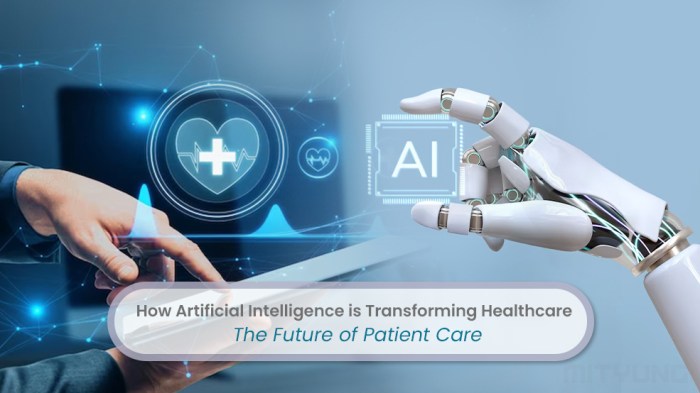
In conclusion, the integration of AI in Health Information Technology is reshaping the landscape of healthcare delivery and patient outcomes. As we look towards the future, the potential for AI to further revolutionize the industry is limitless.
Popular Questions
How can AI revolutionize the healthcare industry?
AI can enhance diagnostic accuracy, streamline administrative tasks, and improve patient outcomes by analyzing vast amounts of data quickly and efficiently.
What are some examples of AI applications in managing health data?
AI is used for predictive analytics, population health management, and personalized treatment recommendations based on individual patient data.
How does AI ensure data security and privacy in health information systems?
AI systems implement encryption techniques, access controls, and strict data governance policies to safeguard sensitive healthcare information.
What is the role of AI in personalized medicine and precision healthcare?
AI enables the analysis of genetic, clinical, and lifestyle data to tailor treatment plans and interventions specific to each patient's unique characteristics.

