

Delving into the realm of Health Information Technology Jobs in High Demand, we uncover a landscape filled with innovation and opportunity. From revolutionizing healthcare delivery to the latest advancements in technology, this guide offers a captivating glimpse into a thriving industry.
As we explore the various facets of this dynamic field, readers will gain valuable insights into the roles, responsibilities, and future outlook of Health Information Technology jobs. Join us on this exciting journey through the world of high-demand careers in healthcare technology.
Overview of Health Information Technology Jobs
Health Information Technology (HIT) jobs play a crucial role in the healthcare industry by managing and organizing health information data. These professionals ensure that patient records are accurate, secure, and accessible when needed.
Importance of Health Information Technology Jobs
Health Information Technology jobs are essential for efficient healthcare delivery as they help streamline processes, improve patient care, and support clinical decision-making. By maintaining electronic health records and utilizing technology systems, HIT professionals contribute to better healthcare outcomes.
Skills and Qualifications Required
- Proficiency in health information systems and electronic health records software
- Knowledge of medical coding and billing practices
- Strong attention to detail and accuracy in data management
- Understanding of healthcare regulations and compliance standards
- Communication skills to collaborate with healthcare providers and other professionals
Emerging Trends in Health Information Technology
Health Information Technology is rapidly evolving, with new advancements shaping the future of the industry. Let's explore some of the latest trends in this field.
Impact of AI and Machine Learning
The integration of Artificial Intelligence (AI) and Machine Learning in Health Information Technology is revolutionizing the way data is analyzed and utilized. AI algorithms can process vast amounts of healthcare data to identify patterns, predict outcomes, and improve decision-making processes.
This has led to increased efficiency, accuracy, and personalized patient care.
Role of Telemedicine
Telemedicine, the use of technology to deliver healthcare remotely, has become increasingly popular, especially in light of the COVID-19 pandemic. This trend has created new job opportunities in Health Information Technology, such as telehealth coordinators, remote patient monitoring specialists, and virtual care managers.
Telemedicine not only expands access to healthcare services but also promotes cost-effectiveness and convenience for both patients and healthcare providers.
In-Demand Health Information Technology Job Titles
As the field of Health Information Technology continues to grow rapidly, there are several high-demand job titles that professionals can pursue. These roles are critical in ensuring the efficient management of healthcare data and information systems.
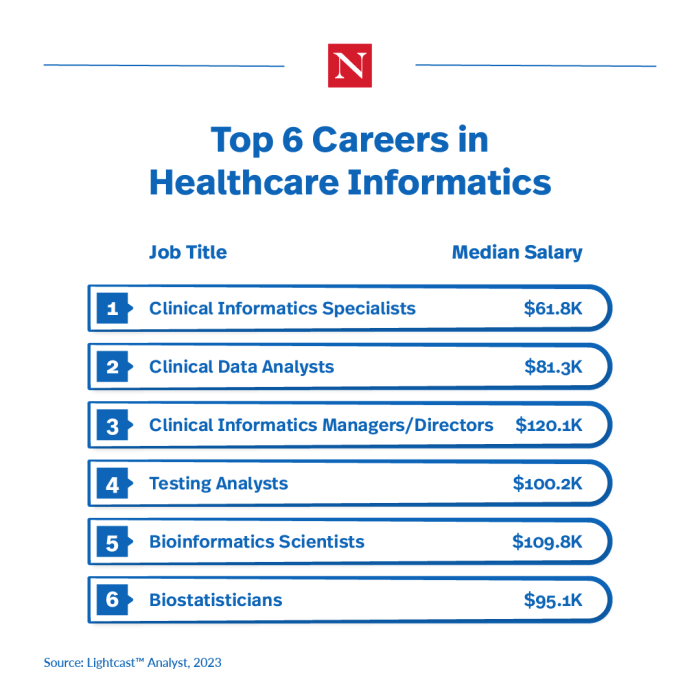
Health Informatics Specialist
A Health Informatics Specialist is responsible for analyzing, managing, and interpreting healthcare data to improve patient outcomes and streamline processes. They work closely with healthcare providers and IT professionals to ensure the effective use of electronic health records (EHR) and other health information systems.
- Responsibilities include data analysis, system implementation, and ensuring compliance with regulatory standards.
- Salary ranges typically start at $60,000 and can go up to $100,000 or more based on experience and qualifications.
- Career growth prospects are promising, with opportunities to advance into roles such as Health Informatics Manager or Chief Information Officer in healthcare organizations.
Clinical Data Analyst
A Clinical Data Analyst is responsible for collecting, organizing, and interpreting clinical data to support healthcare decision-making and improve patient care. They work closely with healthcare providers to ensure the accuracy and integrity of data collected.
- Responsibilities include data collection, analysis, and reporting to identify trends and patterns in clinical outcomes.
- Salary ranges for Clinical Data Analysts typically range from $50,000 to $80,000, with potential for higher earnings based on experience and specialization.
- Career growth prospects include opportunities to move into roles such as Healthcare Data Manager or Data Science Specialist within healthcare organizations.
Health Information Manager
A Health Information Manager is responsible for overseeing the management and security of patient health information, including electronic health records (EHR) and other medical records. They ensure compliance with privacy regulations and maintain the integrity of health data.
- Responsibilities include managing health information systems, training staff on data security protocols, and ensuring data accuracy and accessibility.
- Salary ranges for Health Information Managers typically start at $70,000 and can exceed $100,000, depending on experience and organizational size.
- Career growth prospects for Health Information Managers include opportunities to advance into roles such as Director of Health Information Management or Chief Information Security Officer.
Education and Training for Health Information Technology Jobs
Individuals interested in pursuing a career in Health Information Technology have several educational pathways to choose from, each with its own set of requirements and benefits.
Educational Pathways
There are various educational pathways available for those looking to enter the field of Health Information Technology:
- Associate's Degree: A two-year program that provides a foundation in health information management.
- Bachelor's Degree: A four-year program that offers more in-depth knowledge and opportunities for specialization.
- Master's Degree: A graduate-level program that can lead to advanced roles in the field.
Certifications
Obtaining certifications in Health Information Technology can be valuable for advancing in this field and showcasing expertise. Some certifications to consider include:
- Certified Health Data Analyst (CHDA)
- Registered Health Information Technician (RHIT)
- Certified in Healthcare Privacy and Security (CHPS)
Continuous Learning and Professional Development
Continuous learning and professional development are crucial in the field of Health Information Technology to stay current with industry trends, regulations, and technologies. Professionals can engage in:
- Attending workshops and conferences
- Pursuing advanced certifications
- Participating in online courses and webinars
Impact of Health Information Technology Jobs on Healthcare Delivery
Health Information Technology (HIT) roles play a crucial part in revolutionizing healthcare delivery by improving patient care, streamlining processes, and enhancing overall efficiency within healthcare systems. The integration of technology has the potential to significantly impact the quality of care patients receive and the effectiveness of healthcare providers in delivering services.
Improved Patient Care
- Health Information Technology jobs enable healthcare providers to access patient records quickly and efficiently, leading to better-informed decision-making and personalized treatment plans.
- Electronic Health Records (EHRs) allow for seamless communication between different healthcare professionals involved in a patient's care, reducing the likelihood of errors and ensuring continuity of treatment.
- Telemedicine services facilitated by HIT professionals expand access to care, particularly in remote or underserved areas, improving patient outcomes and satisfaction.
Challenges and Opportunities
- The integration of technology into healthcare systems presents challenges such as data security concerns, interoperability issues between different systems, and resistance to change among healthcare professionals.
- However, these challenges also create opportunities for HIT professionals to innovate and develop solutions that enhance the efficiency and effectiveness of healthcare delivery.
- Artificial Intelligence (AI) and machine learning offer the potential to revolutionize diagnostics, treatment planning, and patient monitoring, with HIT professionals at the forefront of these developments.
Future Outlook
- As the healthcare industry continues to embrace digital transformation, the demand for skilled Health Information Technology professionals is expected to rise significantly.
- Job opportunities in areas such as Health Informatics, Data Analytics, and Health Information Management are projected to grow as organizations prioritize the use of technology to improve patient outcomes and operational efficiency.
- HIT professionals will play a vital role in shaping the future of healthcare delivery, driving innovation, and ensuring the effective use of technology to meet the evolving needs of patients and healthcare organizations.
Last Point
In conclusion, the world of Health Information Technology jobs presents a realm of endless possibilities and growth. As technology continues to reshape the healthcare industry, these in-demand roles are at the forefront of driving innovation and improving patient care. Whether you're a seasoned professional or an aspiring newcomer, the future of Health Information Technology jobs is bright and brimming with potential.
Questions Often Asked
What are the typical qualifications needed for Health Information Technology jobs?
Most roles in Health Information Technology require a bachelor's degree in health informatics, information technology, or a related field. Additionally, certifications such as Certified Health Data Analyst (CHDA) or Registered Health Information Technician (RHIT) can enhance job prospects.
How is AI impacting Health Information Technology jobs?
Artificial intelligence is revolutionizing Health Information Technology by streamlining processes, analyzing data more efficiently, and improving patient outcomes. It is creating new job opportunities in areas like predictive analytics and personalized medicine.
What are some of the high-demand job titles in Health Information Technology?
Some sought-after job titles include Health Informatics Specialist, Clinical Data Analyst, Health Information Manager, and Telehealth Coordinator. These roles play a crucial part in ensuring smooth healthcare operations.
How do Health Information Technology jobs impact healthcare delivery?
Health Information Technology jobs contribute to enhanced patient care by facilitating better communication among healthcare providers, improving data accuracy, and enabling quicker access to medical records. They also help in reducing medical errors and streamlining administrative processes.

